
🕒 3 min
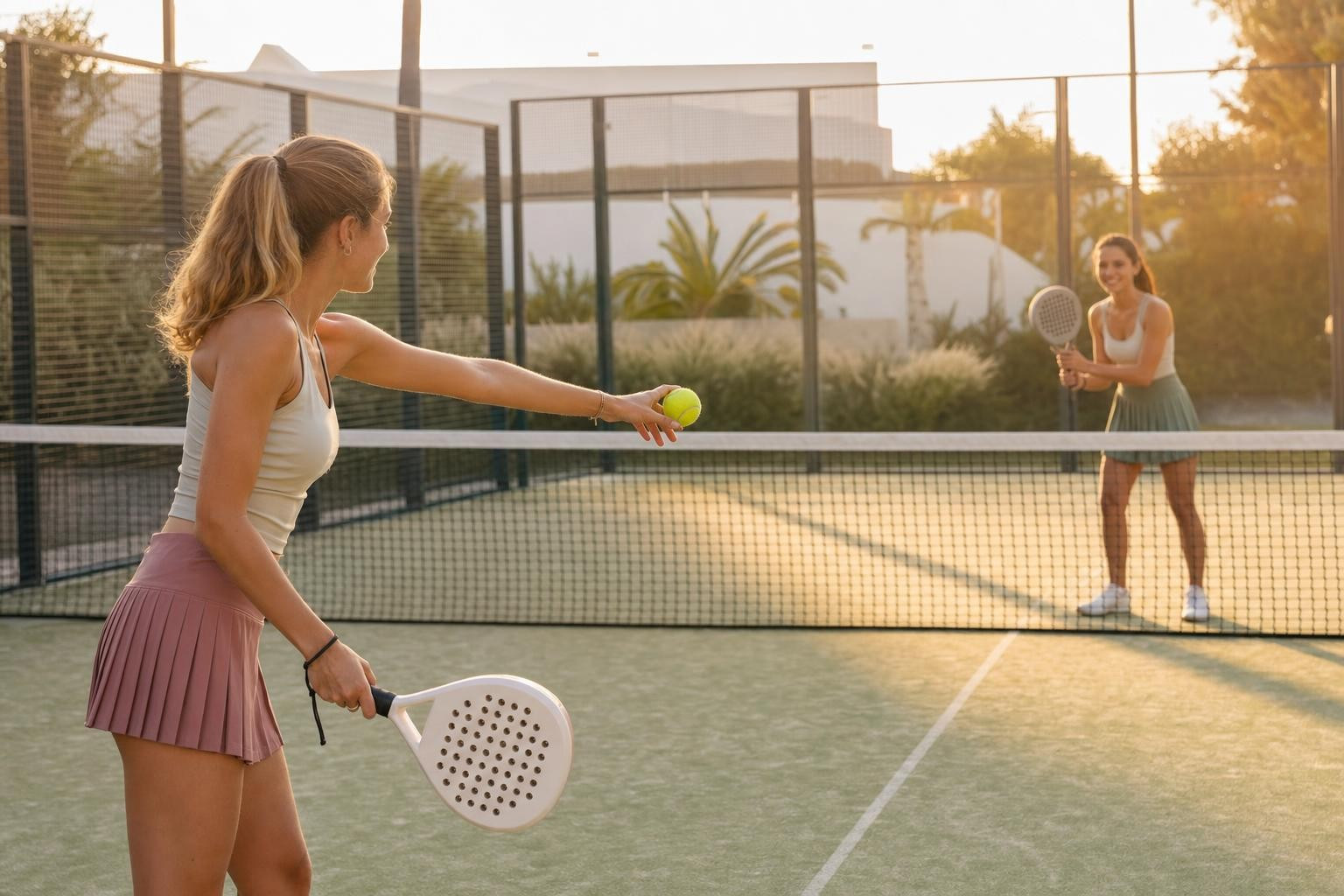
A great match starts before the first ball. A simple, joyful padel serve and return warm-up routine can settle nerves, spark rhythm, and help you and your partner hold from the very first game. Arrive with a plan, breathe together, and you’ll step on court feeling connected, not rushed.
Your 10-minute padel warm-up: minute-by-minute
Use this rhythm as a friendly template. Adjust if courts are crowded, but protect the flow: breathe, mobilize, serve, return, connect, and track one number.
- 0:00–0:45 Breath reset and roles
- Inhale 4, hold 4, exhale 6. Decide who serves first and who usually chases deep lobs on your side.
- Cue: soften shoulders, unlock jaw, easy smile.
- 0:45–2:00 Dynamic mobility
- Shoulder circles, thoracic rotations, hip hinges, calf pumps. Keep it light and specific.
- If anything feels sharp or odd, pause and modify.
- 2:00–4:00 Short serve groove (padel serve drills)
- 6 serves by placement: 2 to center/T, 2 to body, 2 that land then reach the side glass.
- Returner stands in match position and times the split-step to server contact.
- 4:00–6:00 Quick return sequence (padel return of serve drills)
- 6 reps cycling: deep cross, chip/block, lob. Step into depth, breathe.
- Server smooths second-serve routine with a touch more net clearance.
- 6:00–8:00 Serve + partner transition
- Planned serve; net partner practices first-volley position and hand signals.
- Returner recovers quickly and prepares for ball two.
- 8:00–9:30 Pressure check & one metric
- 6 serves under light “scoreboard” pressure; track first-serve in. Returner aims deep cross or back third.
- 9:30–10:00 Cooldown & cue
- Two deep breaths, then a shared cue: steady hands, brave feet. Quick signal check for lobs and middle.
Quick courtside checklist
- One ball each (stash a few nearby if allowed)
- Light racket swings x 10
- Targets in mind: center/T, body, side glass
- Partner signals set (left/right, ‘I take’)
- Timer for 10 minutes
- Notes: first-serve percentage, second-serve reliability
Padel serve drills and placement targets that hold up
Holding serve starts with clarity. Think placement first, power later. Your three go-to padel serve placement targets:
- Center/T: jams the backhand, opens angles for your partner.
- Body: takes time away and forces awkward contact.
- Side glass (after a legal first bounce): adds movement and uncertainty.
Friendly rule reminders: serves are underhand, contact at or below waist height, and the first bounce must land in the correct service box. After that first bounce, the ball may touch the glass; if it hits the fence before the second bounce, it’s a fault. Keep one foot behind the service line at contact and settle into a repeatable routine.
Hold serve in padel tips you can use tonight:
- Breathe and bounce: exhale before contact to release tension.
- See a small target: corner of the box, hip pocket, or the path to side glass.
- Commit to your toss/ball drop and tempo—consistency is a confidence engine.
- Let your partner’s strength guide your serve: if she owns the middle volley, aim center more often.
Padel return of serve drills and footwork cues
Your return sets the tone. Lock in padel footwork and split-step timing so the swing can stay simple.
- Deep cross: shift opponents back, buy time to take the net.
- Chip/block: soft, low deflection that disrupts the first volley.
- Lob return: reset the rally when a team crowds the net.
Footwork refreshers:
- Split-step on server contact—a tiny hop that lands as the ball leaves their strings.
- First step is small and decisive; avoid lunging. Balanced feet = neutral contact.
- Head still through contact. Extend the follow-through toward your target.
Partner communication and league-night etiquette
Clear, kind padel doubles communication builds trust.
- Decide who covers middle balls on serve and return.
- Keep it to two hand signals max (e.g., ‘I take’ and ‘switch’).
- Say the plan out loud once: “Center serve, I’ve got middle.”
On busy nights, be a great court neighbor:
- Keep drills compact and rotate fast.
- Return spare balls to a basket or fence corner.
- Share space and pause for players crossing behind glass.
Level tweaks and a 6-minute backup plan
- Beginner (Essence/Bloom energy): use two targets (center, body); rally at a conversational pace. Focus on a calm toss/ball drop and deep cross returns. Lightweight, comfort-first swings help you find rhythm.
- Intermediate (Aero mindset): add side-glass serves, vary spin, and run a short pressure block tracking first-serve percentage.
- Youth (Twinkle/Flow fun): fewer reps, more encouragement. Practice a consistent toss/ball drop and cheerful split-step timing; keep placements gentle.
Short on time? Try the condensed 6-minute plan:
- 0:00–0:30 breath + roles
- 0:30–2:00 mobility
- 2:00–3:30 serve groove (center, body, side glass, repeat favorite)
- 3:30–5:00 return reps (deep cross, chip/block, deep cross, lob)
- 5:00–6:00 pressure check (2 first serves tracked) + one shared cue
Track simple metrics: pressure checks you can trust
Numbers calm the mind. Pick one to watch tonight:
- First-serve percentage: count makes in 6–12 attempts.
- Second-serve reliability: did most starts feel neutral or better?
- Return depth: how many landed deep cross or in the back third?
Write one small goal on your notes app: “60% first serves in” or “3 of first 5 returns deep.” Then let it guide early points.
Gear and comfort notes for a calm pre-match routine padel
Quick gear wins:
- Fresh overgrip so you don’t over-squeeze.
- Ball check: livelier balls = faster bounce; cooler or worn balls bounce less. Adjust net clearance and spin.
- Grip pressure: soft through the takeback, firm at contact, then back to soft.
If you’re choosing a racket for feel and confidence:
- Twinkle (girls 8–12) and Flow (teens): light, friendly handling that invites clean swings.
- Essence and Bloom (beginner women): comfort-led designs engineered to reduce perceived vibration and player fatigue so you feel more comfortable during extended rallies.
- Aero (intermediate women): a crisp, confidence-forward feel with comfort-focused dampening.
Choose the personality that feels like you, then build your pre-match ritual around it. Always listen to your body; if discomfort is sharp or persistent, rest and consult a qualified professional.
Minute-by-minute snapshot (printable)
| Time | Focus | Reps/Targets | Cues |
|---|---|---|---|
| 0:00–0:45 | Breath + roles | — | In 4, hold 4, out 6; who serves, who chases lobs |
| 0:45–2:00 | Mobility | Shoulders, thoracic, hips, calves | Light, dynamic, painless |
| 2:00–4:00 | Serve groove | 6 serves: 2 center, 2 body, 2 to side glass | Routine first, placement over power |
| 4:00–6:00 | Return reps | Deep cross, chip/block, lob (repeat) | Split-step on contact, balanced feet |
| 6:00–8:00 | Serve + transition | 4 cycles | Hand signals, first-volley spots |
| 8:00–9:30 | Pressure check | 6 serves | Track first-serve in; return deep |
| 9:30–10:00 | Cooldown + cue | 2 breaths | ‘Steady hands, brave feet’ |
Frequently Asked Questions
How long should a padel warm-up be before league play?
Most nights, 6–12 minutes is perfect. This padel serve and return warm-up routine lands right in the sweet spot: quick enough for busy courts, complete enough to feel ready.
What are the best quick serve drills courtside in padel?
Targeted placement reps—center/T, body, and serves that reach the side glass after a legal first bounce—plus a short pressure check of first-serve percentage. Keep your routine and tempo consistent.
How can I improve return consistency in a few minutes?
Time your split-step to server contact, aim deep cross or a soft chip/block, and keep your head still through contact. Three mindful reps per pattern beat 30 rushed swings.
Where should I aim my serve to hold more often in padel?
Mix center and body early to test comfort zones, then add side-glass paths to create movement. Choose placements that pair with your partner’s favorite first-volley position.
Which return patterns work best against strong net teams?
Deep cross to push them back, chip/blocks to keep the ball low, and the occasional lob when they crowd the net. Rotate these looks so they can’t camp.
Should I practice lob returns in a pre-match tune-up?
Yes. One lob per cycle builds confidence for when you need to reset pressure or flip defense to offense.
How do I stay calm and reduce nerves before the first point?
Use the 4–4–6 breath, a short cue you love, and a tiny checklist. A calm pre-match routine padel turns jitters into focus.
What cues should partners discuss in a 10-minute warm-up?
Who serves first, who covers middle, how you’ll call lobs, and one clear ‘I take’ signal. Two cues are plenty.
How can I warm up if the court is busy and time is limited?
Run the 6-minute version: breath, mobility, 4 serves, 4 returns, quick pressure check, shared cue. Rotate considerately with others.
What mobility moves support my shoulder during serve prep?
Dynamic shoulder circles, gentle thoracic rotations, light band work if you have it, and a few smooth overhead swings. Stop if anything feels sharp.
Conclusion
A tiny ritual can make a big difference. Ten thoughtful minutes—breathe, mobilize, serve with intent, return with purpose, connect with your partner—creates early rhythm, steadier hands, and a kinder first game.
Keep it simple: one placement goal, one return pattern, one shared cue. Track a single number, then let yourself enjoy the rally and the laughter that follows. If you love a routine that feels like you, explore Gaxel’s Twinkle, Flow, Essence, Bloom, or Aero—each designed to help you feel comfortable during extended rallies—then Thrive Through Sport, one warm-up at a time.